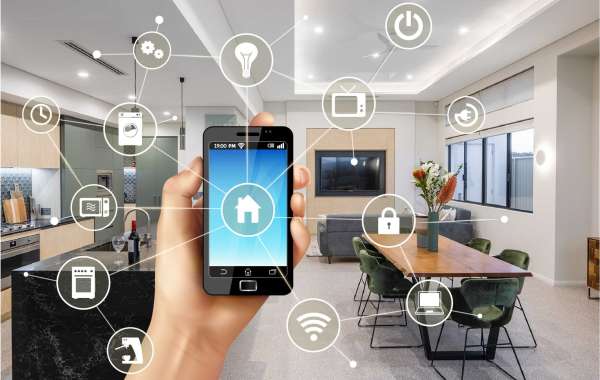

The smart home market, for all its growth and innovation, has been persistently plagued by a fundamental challenge that has frustrated consumers and slowed mass adoption for years: a lack of interoperability between devices from different brands. A market analysis of the technical landscape of the smart home market reveals a history of fragmentation, with a confusing array of competing wireless standards like Zigbee and Z-Wave, and proprietary ecosystems controlled by individual companies. Key points related to the smart home market's past struggles center on this fragmentation. A smart light bulb from one brand might not work with a smart switch from another, creating a complex and user-unfriendly experience. To address this head-on, the industry's biggest key players—including Apple, Google, and Amazon from North America, alongside hundreds of other companies from Europe and APAC—have collaborated under the Connectivity Standards Alliance (CSA) to create a new, unifying standard called Matter. The future in the smart home market is now inextricably linked to the success and adoption of this new standard, which promises to make interoperability the norm.
Matter is designed to be a unifying, open-source application layer that runs on top of existing network technologies like Wi-Fi and Thread (a low-power mesh networking protocol), a key point for understanding its technical approach. Matter is not a new wireless radio, but a common IP-based language that allows devices to talk to each other securely and reliably, regardless of the manufacturer. The promise of Matter is simple but profound: if a device is Matter-certified, it will work seamlessly with any other Matter-certified device and with all the major smart home ecosystems. This is a game-changer for both consumers and device manufacturers. For consumers, it eliminates the confusion of compatibility issues, allowing them to buy devices with confidence. For device manufacturers, it dramatically simplifies development. The key players have all committed to supporting Matter in their platforms and devices. The smart home market size is projected to grow USD 387.22 Billion by 2035, exhibiting a CAGR of 10.69% during the forecast period 2025-2035. The simplified user experience enabled by Matter is expected to be a major catalyst for this growth, accelerating adoption in all regions, including the emerging markets of South America and the MEA where simplicity is paramount for first-time users.
The future in the smart home market, in a post-Matter world, is one of a more open, competitive, and innovative ecosystem. A key point for the future is that with the base layer of connectivity and interoperability solved, companies can focus on competing and differentiating themselves on the quality of their hardware, the uniqueness of their software features, and the intelligence of their user experiences, rather than on locking users into a proprietary ecosystem. The future will see a proliferation of new and innovative smart home devices from a wider range of manufacturers, as the barrier to entry is lowered. The key players who own the major platforms will still be central, but their role may shift from being gatekeepers to being orchestrators of a more diverse ecosystem. The successful rollout and widespread adoption of Matter are therefore seen as a critical inflection point for the industry, with the potential to unlock the next major wave of growth by finally delivering on the original promise of a simple, reliable, and seamlessly connected smart home. This will have a global impact, simplifying the smart home experience for consumers in North America, Europe, APAC, and all other regions.
In summary, the key points related to interoperability highlight the historical challenge of fragmentation and the pivotal role of the new Matter standard in solving it. The standard is backed by all the major key players in the industry, from North America, Europe, and APAC, promising a future of seamless device compatibility. The future in the smart home market is one where Matter acts as a unifying force, accelerating innovation and mass-market adoption by simplifying the user experience. This global standard will be crucial for the market to reach its full potential, creating a more open and competitive environment for device makers and a more user-friendly ecosystem for consumers in every region, from North America and Europe to APAC, South America, and the MEA.
Top Trending Reports -
India Data Center Outsourcing Infrastructure Utility Services Industry
Japan Data Center Outsourcing Infrastructure Utility Services Industry